Valheim Sailing and Recovery: Prepare the Boat, Establish a Return and Retrieve Gear
A sea crossing can carry progression forward or strand the equipment needed to recover from it. The first dependable voyage is therefore a route with supplies and a return plan, not simply a boat pointed toward unexplored water. This guide covers early unmodded sailing and ordinary tombstone recovery, reviewed October 18, 2026 in the official 1.0.20 period. World modifiers can change death and portal rules. It contains travel-system spoilers and avoids universal speed, storm or enemy-escape promises.
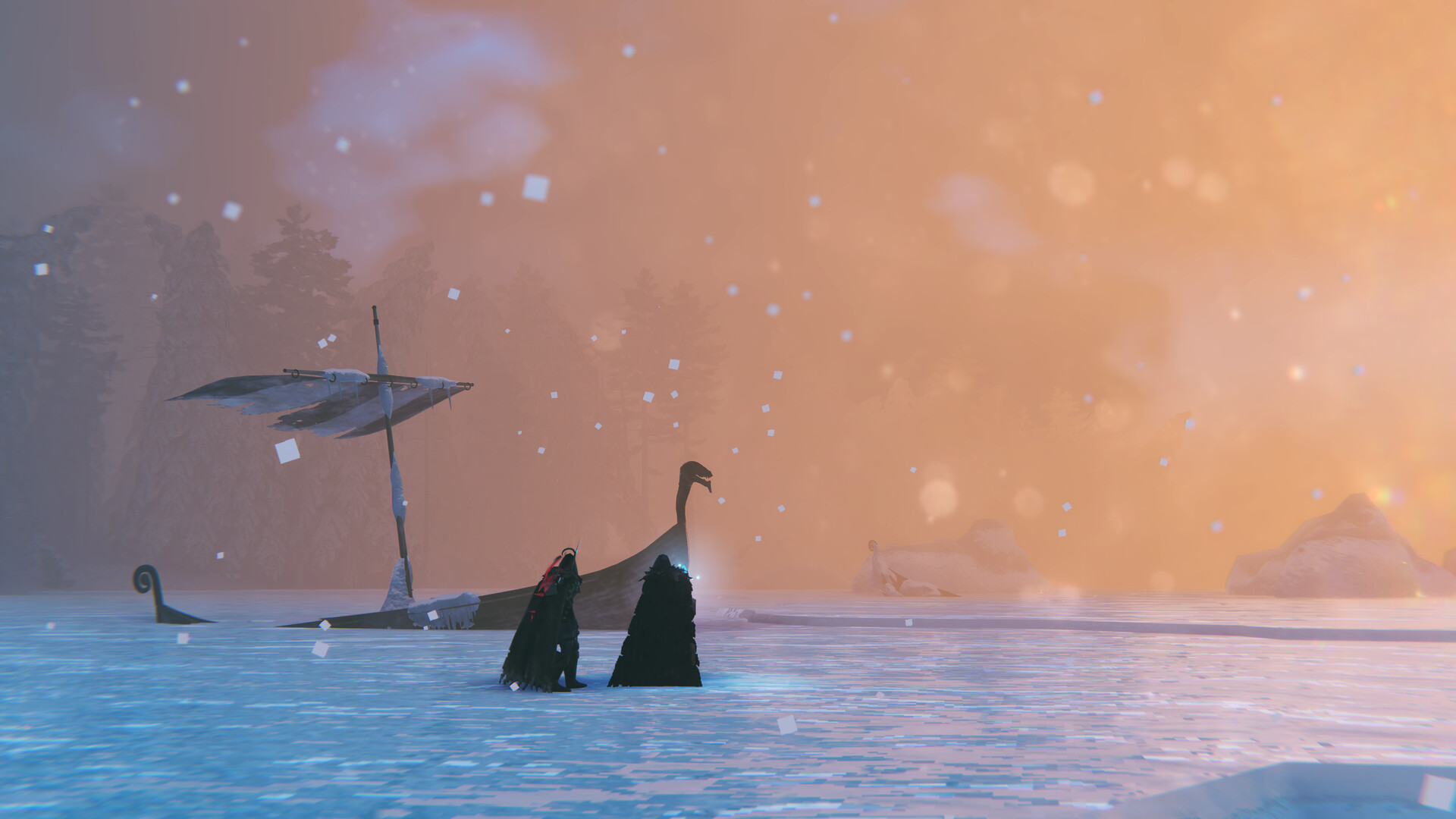
Official game screenshot · Coffee Stain Publishing. Publisher-provided public store media used to illustrate independent editorial discussion. Copyright remains with the respective rights holders; no redistribution license is offered.
Choose a learning voyage before a large expedition
Start with a short route near known coastline and a manageable load. Learn boarding, steering, sail states, stopping and climbing back aboard before carrying all the metal needed for the next stage. The Karve is a practical early step beyond a raft once its materials are available, but it is not indestructible. Inspect the vessel’s condition and repair it at appropriate workbench access before departure. A distant cargo trip is a poor place to discover that you do not know how to slow down or return to the ladder after falling into the water.
Read the wind rather than holding the same direction
Interact with the rudder and use the sailing display to understand wind relative to the bow. Sails do not provide useful forward drive directly into the blocked wind direction; the low-speed paddling state provides a different movement option. Adjust the route or wait when conditions make a planned crossing awkward. Avoid using full sail close to rocks and a narrow landing just because it was helpful in open water. Reduce speed before arrival and allow room to turn. The right action depends on the coastline and wind now, not a copied exact compass route from another world.
Carry food and a realistic shore kit
Eat before departure and take spare servings because landing can lead directly into a fight. Bring the hammer, basic building supplies and what is needed to establish a useful temporary repair or return point. Once portals are available, prepare the materials and a corresponding home connection before relying on them. Carry only equipment and cargo whose risk you accept. Do not pack the entire reserve of food and spare weapons into the same boat you might need to recover. Leave a functioning home with enough supplies for another attempt.
Land in a biome you can actually manage
Read the visible coast and choose a landing where you can step onto usable ground rather than swimming into an unknown hostile biome. A beach that looks empty at sea may have threats just behind the terrain. Slow early, position the vessel deliberately and establish a way to repair it. Do not leave the boat exposed while chasing a new discovery far inland. Mark the landing on a map-enabled world and identify the route back. A longer approach from manageable ground can be safer than parking directly beside the most dangerous part of the objective.
Establish and test the return connection
If placing a portal, give it the exact matching tag and verify that it connects to the intended counterpart. Test the link before depending on it for an emergency recovery. Keep the structure and supporting shelter away from the first obvious hostile approach. Under ordinary wood-portal rules, carried ore and bars can block teleportation; world modifiers and later portal types can change this. Inspect the item restriction rather than assuming an active portal can transport the entire ship’s cargo. Store restricted material safely and plan the manual or sailing leg separately from the character’s quick return route.
Keep the vessel available for the trip home
Monitor condition and avoid leaving the boat scraping repeatedly against terrain while you explore. Preserve an approach that lets you board without an exhausted swim. If weather or threats make the planned route unreasonable, return early with the supplies you already have. Do not gamble every collected item on a final unfamiliar coastline simply because the boat still has storage space. A transport route becomes valuable when it can be repeated. The first successful outward crossing is only half the journey if the vessel is then abandoned somewhere the returning character cannot reach safely.
Prepare a tombstone recovery instead of a panic swim
After a death, eat from the reserve, restore Rested and identify the location and cause before setting off. The community death entry describes floating tombstones for deep-water deaths, but reaching one still requires travel and surviving the approach. Bring enough capacity to recover items and a way to leave, rather than filling the new inventory with unnecessary replacements. Avoid a long unprepared swim toward a marker; stamina and hostile surroundings can create another death before recovery. If a friend helps, agree who operates the boat and how the person recovering will get aboard.
Use the recovered gear to leave the danger first
Collecting a tombstone is not the moment to sort every spare item while the original threat remains nearby. Recover what you can, reach the safe vessel or shelter and reorganize there. If a full recovery cannot happen in one visit, prioritize a controlled sequence over repeatedly arriving hungry with no space. Inspect the boat and portal afterward and replace the supplies that made the rescue possible. Record the route lesson: unsafe landing, no return link, poor wind handling or an empty home reserve. Correct that weakness before making the next trip more valuable.
Your working checklist
Checkmarks stay in this browser when storage is available. They do not alter your game or connect to your account.
Put it into practice
- Practise near known coast before carrying a high-value load.
- Read wind and reduce speed before a manageable landing.
- Repair, mark the landing and test any return portal.
- After a death, prepare food and transport, recover deliberately and leave before sorting.
Before you finish
- An active wood portal does not automatically accept ore and bars.
- A floating tombstone still requires a safe recovery route.
- Do not risk the whole home reserve on the same first voyage.
Common questions
Should the first voyage carry all my metal?
No. Learn handling and a repeatable landing with a manageable load before committing a large cargo.
Why can I not use my connected portal?
Check carried restricted items, the exact tag and the world’s portal settings. A connection and permission to teleport are different checks.
What is the first step after dying at sea?
Prepare food, rest and a transport plan from the reserve at home rather than starting an unprepared long swim.