Valheim Dungeon Routes: Keep an Exit and a Clear Turnaround Point
A dungeon can turn a simple search into route confusion. Prepare one clear objective, keep track of junctions and choose when to leave before the return becomes a separate emergency.
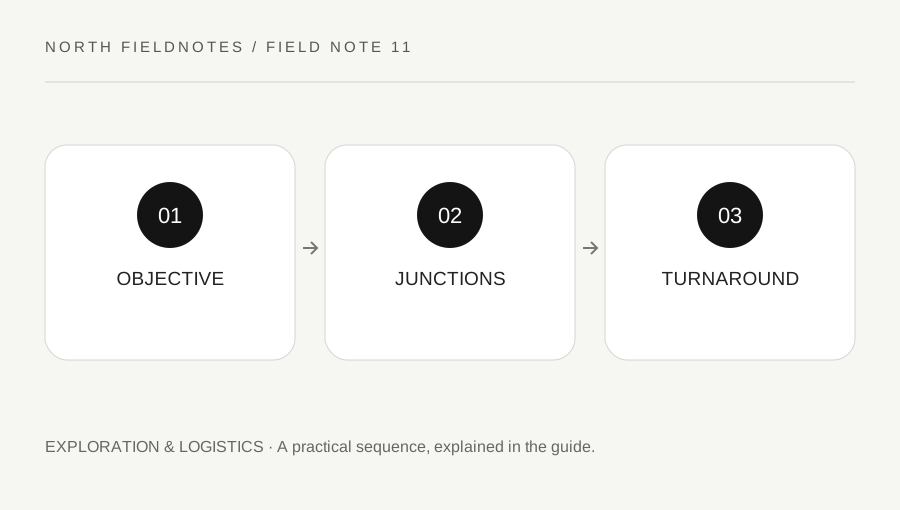
Original explanatory diagram. Examples illustrate a method or decision; they are not claims of personal testing.
Define the first visit’s scope
Choose whether the trip is a short scout, a search for a particular resource or a fuller clear. Those tasks have different preparation and time needs. A first glimpse of an entrance does not establish what lies beyond it.
Read the current environment and your progression rather than assuming every dungeon shares a layout or threat level. Iron Gate's world includes different dungeons, crypts and caves; a method for route discipline does not make them mechanically identical.
Keep the exit approach and any outside staging point in the plan. If the entrance area itself is difficult, resolve that before assuming it will be a convenient recovery route later. A useful dungeon note begins with how the group got there and how it intends to leave, not only what treasure might exist inside.
Use a consistent junction method
At a branch, record which direction was inspected and which remains unknown. Use a method compatible with the game and world rules, such as a simple written sketch or agreed verbal labels. Do not assume every dungeon allows the same building or marker tools.
In co-op, keep the group informed before splitting. Two players exploring separate branches can increase coverage while reducing support and creating confusion about cleared areas. Agree on whether splitting serves the objective and how the group will reconnect.
For a worked example, a party labels the first junction left branch and right branch, then finishes one short section before moving to the other. A note says whether a passage was cleared or merely seen. This prevents a later player from treating a quick glimpse as confirmation that the whole branch is safe.
Set a practical turnaround condition
Choose conditions tied to the actual trip: limited supplies, equipment condition, inventory capacity or an unresolved threat. These are prompts for reassessment rather than permanent numerical thresholds that fit every dungeon.
If the condition is met, return while the route is still understood. The desire to inspect one more room can turn a manageable exit into a difficult recovery, especially when the group has already lost track of which branch leads back.
Keep resource collection connected to carrying and return options. A full inventory can make a valuable find inconvenient if no plan exists for what to leave or how to move it. Do not spend the last practical return resource on an optional extension without a shared decision.
Record a usable result after leaving
Write what was completed, what remains and which junction leads to the unresolved area. Include any observed access condition or unusual threat without inventing a permanent map from a procedural layout. Another world's dungeon with a similar name may not match yours.
Inspect equipment and supplies before planning the next visit. If the trip ended early, name the actual bottleneck rather than treating it as a general failure. A scouting trip that identifies a route and a missing preparation item can be successful at its stated purpose.
Finish with a short return plan for the next session. Route discipline makes exploration cumulative: the group adds verified knowledge without forgetting how it was obtained. The goal is a clear local record and a deliberate exit, not a universal dungeon walkthrough that assumes every generated chamber and current version behaves the same way.
A practical checklist
Choices are saved in this browser. Reset them here or clear this site’s browser storage.
Questions that come up
Does one clear room mean the branch is safe?
No. Keep the inspected area and unknown continuation separate in the record.
Can every dungeon use the same marker tool?
Do not assume so. Use methods permitted by the actual environment and world configuration.
Is an early exit a failed trip?
Not necessarily. A scout can succeed by identifying the route and the preparation needed for a later visit.
References & scope
Background references checked on 18 October 2026. Worked examples and diagrams are original teaching material.