Valheim On-Foot Recovery: Retrieve Gear Without Repeating the Same Route Failure
A recovery trip begins from a different situation than the original expedition. Rebuild the minimum preparation, inspect the route and define what you will retrieve before returning to the same danger.
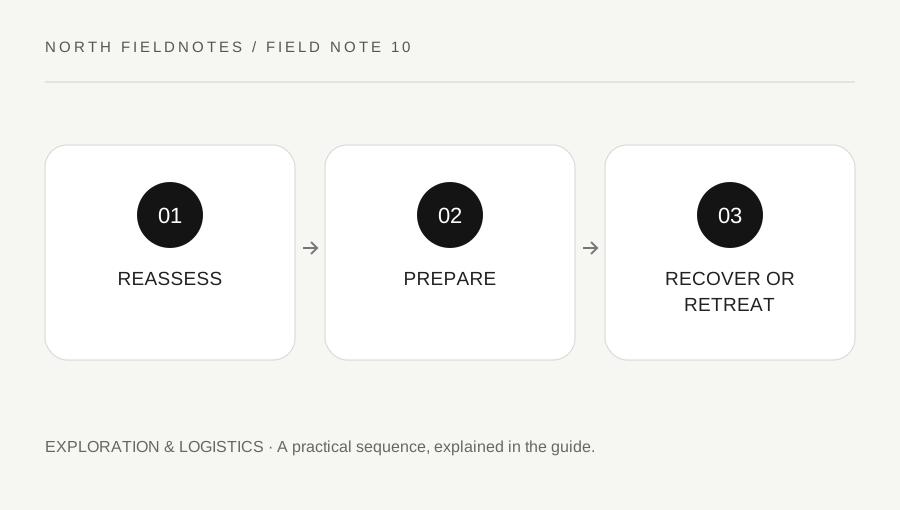
Original explanatory diagram. Examples illustrate a method or decision; they are not claims of personal testing.
Reconstruct the loss before leaving
Write where the gear was lost, which threats remain and what route is known. Separate a confirmed location from an approximate memory. A marker can help where the world's settings allow it, but the route and current danger still require thought.
Check the actual death and recovery rules for the world. Settings, updates or modifications can change the cost and available options. Do not assume a previous server's penalty or recovery behavior applies unchanged.
The first objective is retrieving useful equipment or reaching a safe staging point, not proving that the original fight can now be won with less preparation. A rushed repeat often preserves the same route error while removing the gear that made the first attempt possible.
Prepare a minimum viable return
Use the base's available supplies to restore a practical movement and survival plan under the current game rules. The separate food-and-rested guide covers character preparation; here the question is whether the recovery route has the equipment and support it actually needs.
Keep enough inventory space for the intended retrieval and know what can be left behind temporarily. Do not fill every slot with replacement items without considering how the recovered load will be handled. Check the route's transport and portal conditions if those are involved.
For a worked example, a player lost gear inside a hostile area reached through a long exposed approach. They first establish a nearer safe staging point and ask a prepared teammate for help, rather than sprinting alone from the main base with no plan for the return load.
Approach the problem in stages
Reach the last known safer position and reassess. If the threat or environment is different from memory, update the plan before committing. A recovery goal does not make new information less important.
In co-op, separate the jobs clearly: one player may watch the approach while another performs the retrieval, if the situation supports that arrangement. Do not assume a teammate understands the intended timing merely because they agreed to help.
If the retrieval becomes unsafe or the route closes, retreat and revise. Repeatedly adding another loss to the same location can make the problem harder. This is an ordinary supported-play plan, not a console-command recovery method or a guarantee that every item can be retrieved under all circumstances.
Return and repair the underlying cause
After recovering, move to a suitable place before reorganizing the entire inventory. Check which equipment is usable, what supplies were spent and whether the route remains viable. Do not turn successful retrieval into an immediate unsupported attempt to repeat the original objective.
Review why the first expedition failed: route confusion, insufficient preparation, a missing return option or an unexpected threat. Choose one specific correction before returning for the original task. A recovery success does not prove the original plan was sound.
Finish by updating the base note and any route marker. Keep the distinction between gear recovered and objective completed. This makes the episode useful for progression rather than a cycle of hurried returns, and it helps the group preserve resources by addressing the decision that created the difficult recovery in the first place.
A practical checklist
Choices are saved in this browser. Reset them here or clear this site’s browser storage.
Questions that come up
Should I return immediately with no preparation?
Not automatically. Reassess the route and minimum needs under the current world rules before repeating the exposure.
Does this guide use console commands?
No. It describes ordinary planning and supported recovery actions, not item spawning or save manipulation.
Does recovering gear mean the original objective is complete?
No. Review the original problem separately before resuming it.
References & scope
Background references checked on 18 October 2026. Worked examples and diagrams are original teaching material.